


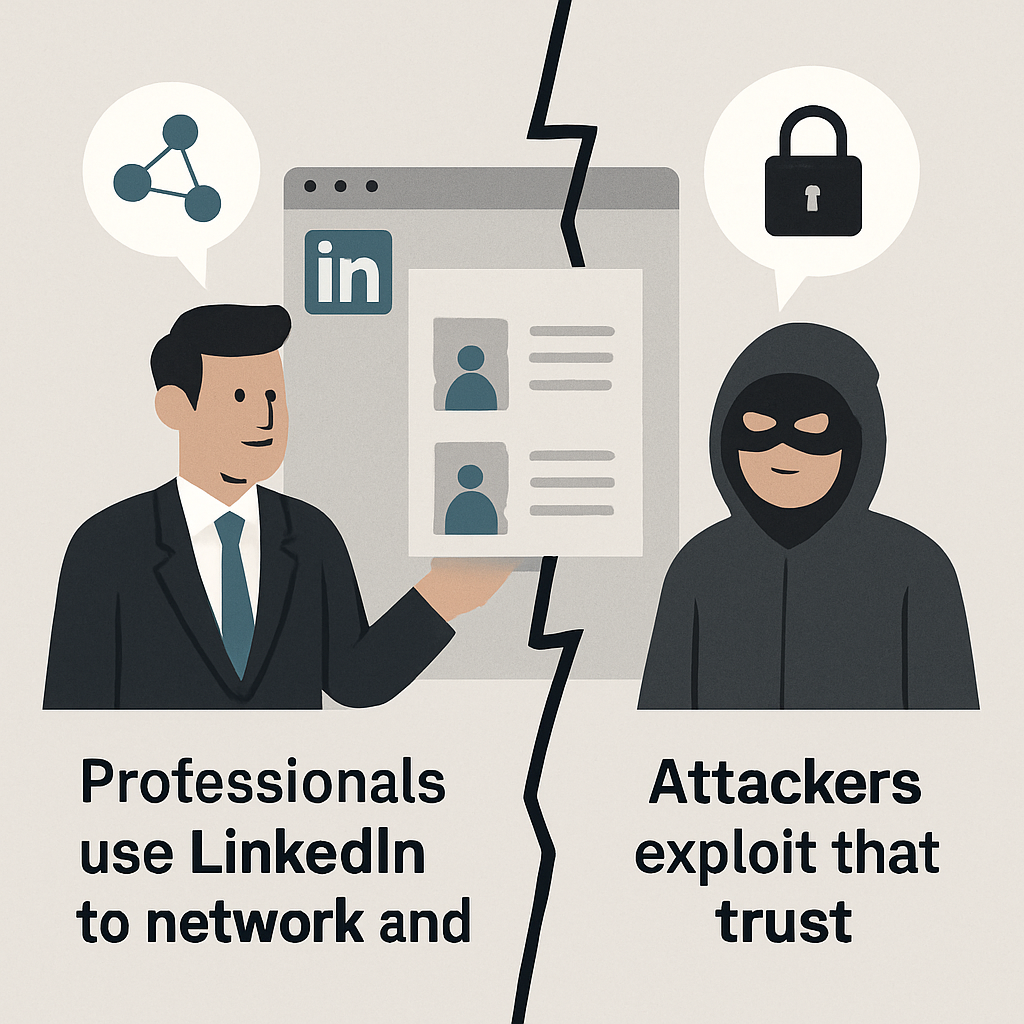
Professionals rely on LinkedIn every day to network, recruit, and build relationships. But as business conversations move onto social platforms, attackers are finding new ways to take advantage of that trust.
Security teams have recently observed threat actors using LinkedIn direct messages to deliver malware, bypassing traditional email security tools entirely.
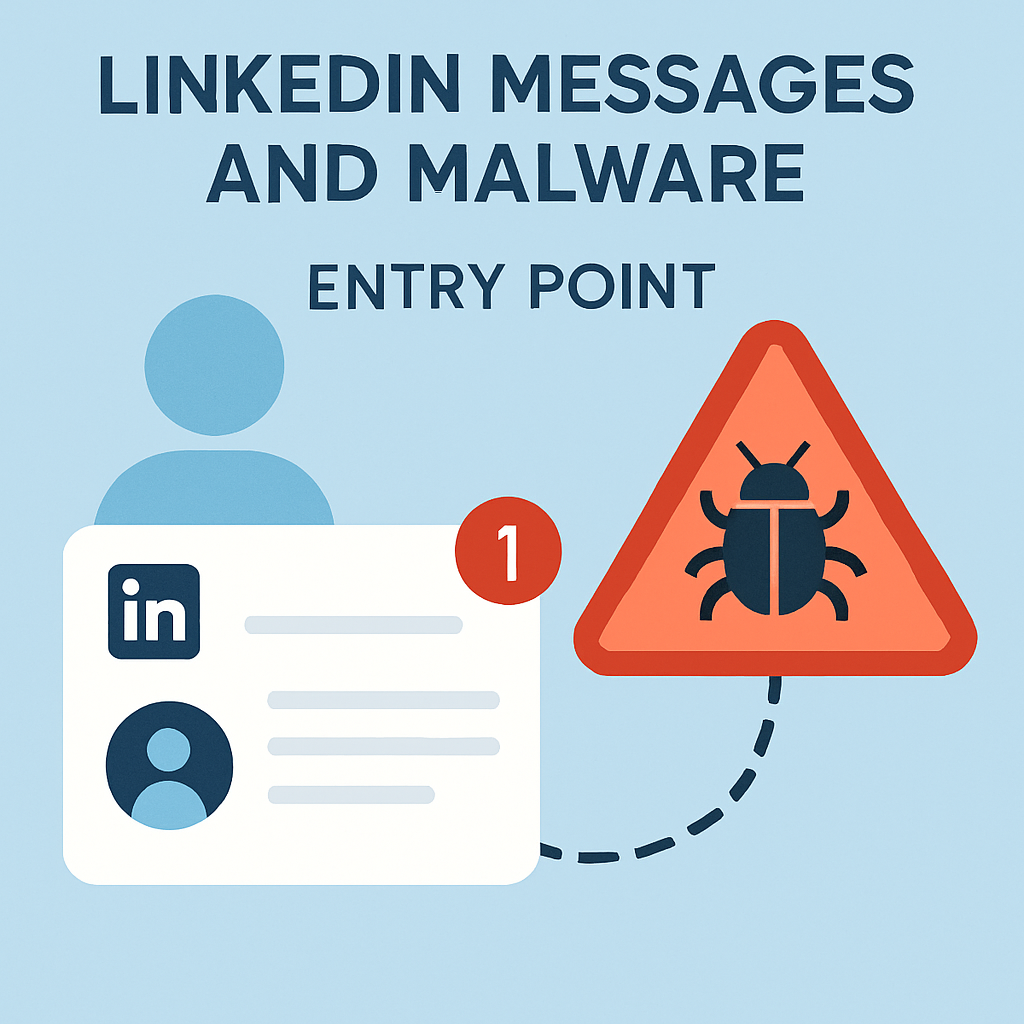
Why This Matters
Most organizations invest heavily in email protection, endpoint security, and network monitoring. Social media messaging, however, often sits outside those defenses.
When attackers use platforms like LinkedIn, they’re not breaking through firewalls- they’re walking in through a door that isn’t being watched.
How the Attack Typically Unfolds
The attack begins with a direct message sent to a targeted individual, often someone in a technical or decision-making role. The conversation appears legitimate and may continue over multiple exchanges to establish credibility.
Once trust is built, the attacker shares a file disguised as a normal document or tool. Behind the scenes, that file is structured to quietly load malicious code using trusted software components.
This method allows the malware to run without triggering many traditional security alerts.
What Makes This Technique Hard to Detect
Instead of dropping obviously harmful programs, the attack relies on legitimate applications to execute malicious components. This approach blends harmful activity into normal system behavior.
Once active, the malware can:
- Maintain long-term access to the system
- Communicate with external servers
- Collect sensitive data
- Move deeper into the network
Because the activity appears to come from trusted software, it’s often overlooked until damage is already done.
Social Engineering Is the Real Weapon
The technical elements matter but the success of these attacks depends on human interaction. Direct messages feel personal, informal, and safe, especially on professional platforms.
Unlike email phishing, social messages are less likely to be scanned, logged, or flagged, giving attackers more freedom to operate unnoticed.
This Isn’t a One-Off Incident
LinkedIn and similar platforms have been used repeatedly in past campaigns, including fake job offers, interview requests, and shared project files. Each variation targets curiosity, opportunity, or professional ambition.
As attackers refine these methods, social platforms continue to grow as a preferred entry point.
What Organizations Should Be Thinking About
Security strategies can’t stop at email anymore. Any platform used for business communication must be treated as part of the attack surface.
That means:
- Training employees to recognize social engineering beyond email
- Establishing clear policies around file sharing in direct messages
- Monitoring endpoints for abnormal behavior, not just known threats
- Treating social platforms as potential access points, not neutral tools
Key Takeaways
- Social media messages are increasingly used to deliver malware
- Trusted software can be abused to hide malicious activity
- Email-only security strategies leave major gaps
- Human trust remains the primary attack vector
Staying Secure in a Social-First Workplace
As professional communication continues to spread confirmed platforms, security must evolve with it. At Skyriver IT, we help organizations identify blind spots, adapt security strategies, and reduce risk across every channel employees use.
If your teams rely on social platforms for business communication, it may be time to reassess what’s protected and what isn’t. Contact us today to strengthen your defenses before attackers take advantage of the gaps.
